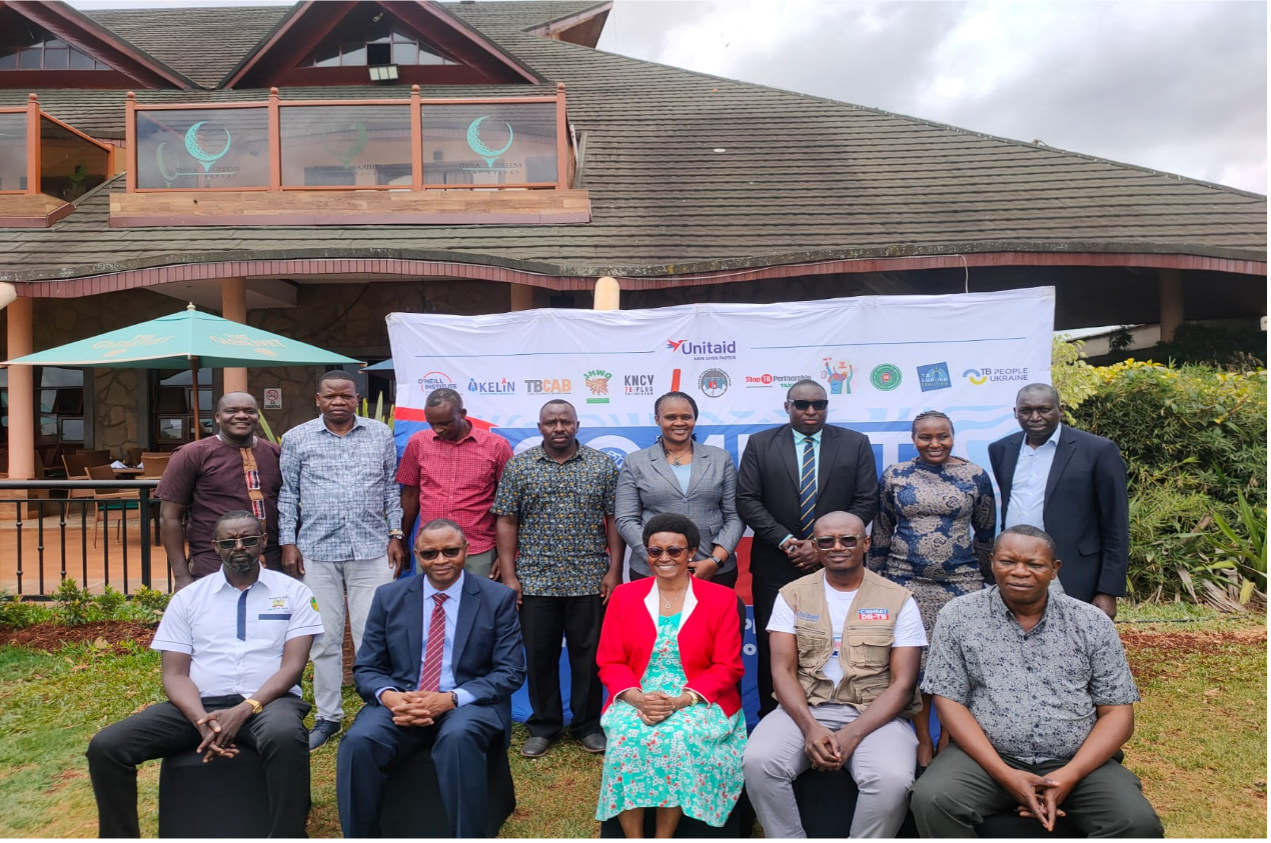
Kenya is intensifying its efforts to combat Drug-Resistant Tuberculosis (DR-TB) through groundbreaking innovations in AI, strengthened community systems and multi-sectoral collaboration. This progress was showcased in Nakuru County during an advocacy workshop hosted by the Kenya Legal and Ethical Issues Network on HIV and AIDS (KELIN), with support from Unitaid, under the COMBAT DR-TB project. The workshop brought together government, civil society, community representatives and TB champions to reflect on progress and chart the next steps in the fight against DR-TB.
One of the most exciting developments is the adoption of AI-powered digital chest X-rays to help detect TB faster and more accurately. The Kenya National TB Program announced the progress made with county healthcare workers already undergoing training. A nationwide rollout is expected by mid-September 2025 and is set to be a game changer in early detection of TB and ultimately saving millions of lives. Apart from the GeneXpert machines that are in all counties, the TB programme also reported that Kenya now has 20 GeneXpert XDR machines across the country, an important step forward as they can detect resistance patterns beyond MDR-TB and rifampicin resistance.
DR-TB response is anchored nto Universal Health Coverage (UHC) agenda, supported by community health systems to reach even the most remote areas and underserved populations. Beyond the health sector, Kenya is also bringing in players from housing, environment, mining, and even climate sectors through the Multi-Sectoral Accountability Framework (MAF)—because TB isn’t just a health issue, but also tied to living conditions and poverty. . Despite these gains, challenges like stock-outs of commodities, delays in drug distribution, delay culture results, surveillance gaps, health worker strikes and suboptimal treatment outcomes. DR-TB treatment outcomes remain at 52 percent on the BPaLM regimen, while general TB treatment success is at 69 percent.
In 2024, Kenya reported 751 DR-TB cases, an increase from 706 in 2023, attributed to expanded testing capacity for the rollout of short-term regimens. Two XDR-TB cases were also recorded this year, with each case costing over KSh 2 million to treat. Counties are also showing progress. Lamu County, which reported no DR-TB cases in 2023 due to health worker challenges, was able to detect and notify cases in 2024 after addressing capacity.
During the Nakuru workshop, participants committed to step up advocacy for increased domestic resource allocation to ensure sustainability of DR-TB programs while at the same time intensifying domestic resource mobilization and accountability through mechanisms such as community-led monitoring. They further emphasized the integration of patient social support within UHC and Social Health Authority (SHA) insurance schemes to reduce the burden on families. Commitments were also made to strengthen advocacy for TB supply chain and improve commodity management to avoid treatment disruptions, while promoting a patient-centred care by expanding community and home-based treatment models. Moreover, the participants pledged to ensure inclusion of CSOs, TB champions and survivors in national and county-level TB policy forums and to lead awareness campaigns by amplifying survivors’ stories and leveraging digital platforms.
With the leadership of KELIN through the Combat DR-TB project and the commitments made by diverse stakeholders, Kenya is positioning itself to accelerate progress toward ending TB and DR-TB and ensuring equitable, accessible and patient-centred care for all.
For more information, please contact:
Duke Otieno
Project Coordinator- HIV/TB
Kenya Legal and Ethical Issues Network on HIV & AIDS (KELIN)
Kuwinda Lane, Karen C, off Langáta Road