By Mariam Jamal – KCAT Member
I was recently presented with the opportunity to attend the Forum on Internet Freedom Africa (FIFA), (in Windhoek, Namibia) and share on the work that the Digital Health and Rights Project is doing, focusing on a participatory action research project that started in 2023 and spans across Kenya, Ghana, Vietnam, and Colombia. I sit on the Kenya Community Advisory Team alongside other young experts and inform several aspects of the research. The same is true for all the other focus countries.
As the conference sessions began, I realized that some things seem the same within the ecosystem, and some different, in that I could tell that the USAID funding cuts had affected so much of the work being done and, by extension, the impact of great initiatives so many had worked hard to achieve, with regards to Internet governance, freedom and digital rights. This was quite a sad revelation and highlighted how urgently programming needs to be re-imagined to ensure sustainability and sovereignty.
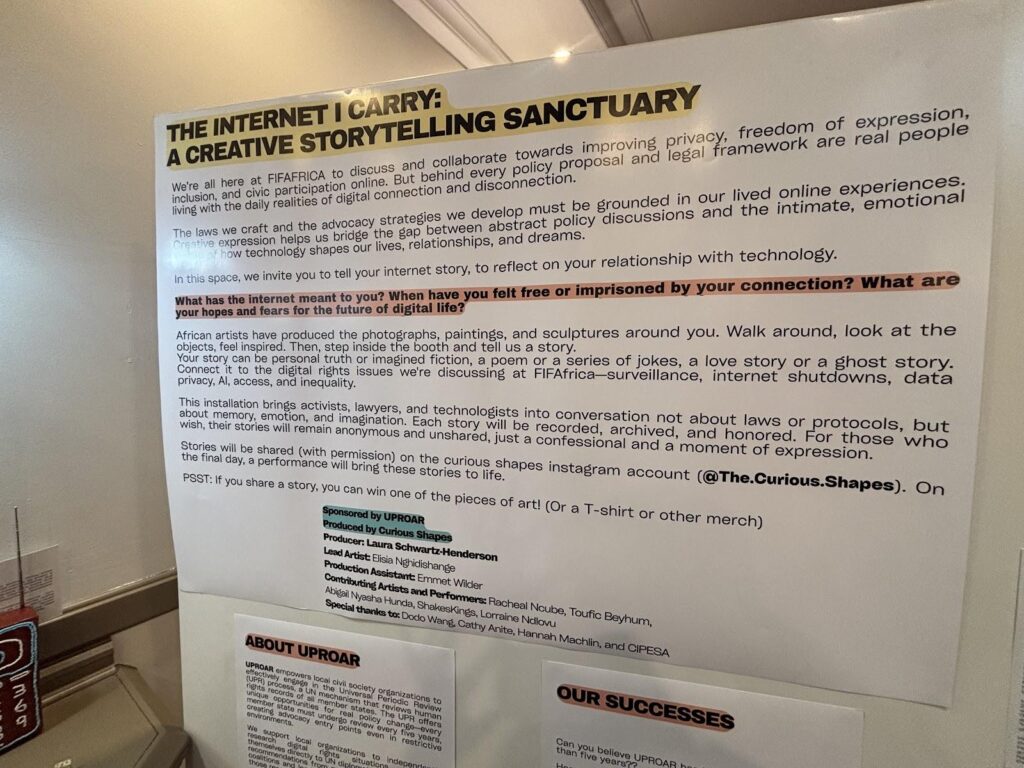
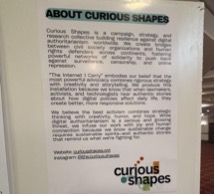
On the other hand, there was so much amazing work being presented! Two things stood out to me the most: a storytelling booth that was being run by Curious Shapeson the sidelines of the conference. Curious shapes explores the complex techno-social challenges confronting activists and human rights defenders globally by combining collaborative research, strategic foresight, impact assessment, creative communication and tailored training.
I was also thoroughly intrigued by a presentation made by one of my Co-panelists, Zanele, on the work that Gender Rights in Tech (GRIT) is doing in South Africa. GRIT is harnessing technology to counter gender-based violence, and incorporating local languages, particularly those unique to how survivors communicate their understanding of gender-based violence. This also includes tools that allow survivors to access help and safely store evidence and has proven useful for production of the same in court.
Two Truths and A Lie – Kenya Edition
For the Digital Health and Rights Project’s presentation I chose to spotlight the relationship that Africa has had with research, especially funded research, and the need for a different approach. I made a presentation in that session alongside my colleagues from NAP+ (Ghana) and Restless Development focusing on the research report “paying the cost of connection.”
To do this, I chose to challenge people to play a game with me. It’s called two truths and a lie, Kenya edition.
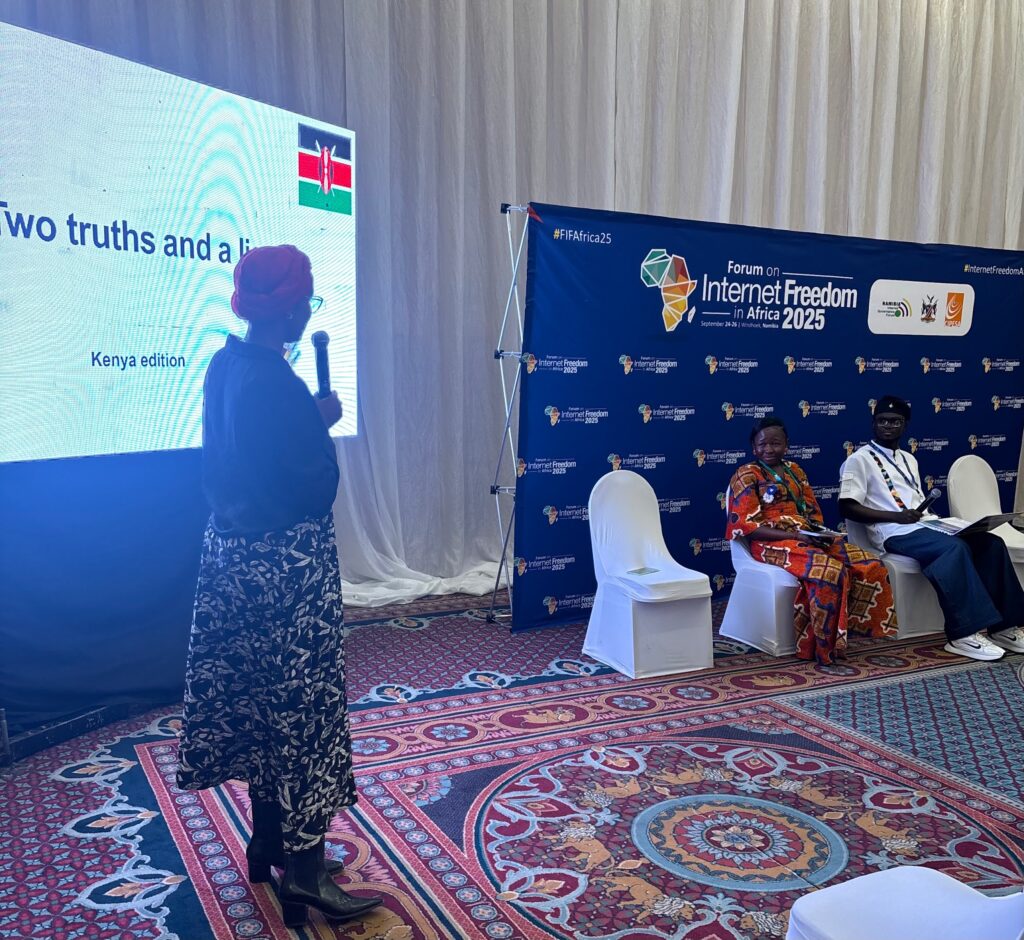
My argument is that if you cannot answer three questions about a country, factual, technical and niche to your research area, then you have to re-evaluate your intentions, objectives and look into local partnerships to support in understanding local context. This is particularly true for situations where there are resources to facilitate this.
This is because research has overtime become very extractive, with questionable ethical considerations, leaving communities who engage with a lot of researchers resentful of civil society, academia, and the infantilization that they experience in the processes. In addition, these communities experience “compassion” fatigue, making continual research and engagement hectic and unproductive.
This was especially because the “researchers” lacked cultural context, with the main researcher lead, mostly foreign, probably devoid of understanding of the communities they choose to focus on and with little to no reliance on local partnership. This results in a huge gap in achieving research objectives and value-addition to these communities.
I had noted a marked divergence from this model in DHRP’s participatory action research model. There was an understanding that things have to change in order for research to be impactful.
My call to action is that we have to re-evaluate our understanding of the impact of research in digital rights, especially when working for and with communities who have overtime been at the intersection of so much disenfranchisement, that they are the communities who researchers go back to time and again, resulting in a dynamic that is not collaborative, but extractive and leading to eventual resentment. The “do no harm” principle sacrificed at the altar of papers and articles left unread and unused to colour websites and repositories.
Therefore, with you I leave two truths and a lie: the funding cuts were a positive thing for Africa and will allow us to build back better; panel-style conferencing is outdated; and participatory action research is the only way to go. What are your truths, and what is the lie?