By John Macharia, KELIN
In the present interconnected world, digital health is no longer a future ambition, it is the present reality shaping how communities access care, information, and dignity. After an inspiring week-end in Accra for ICASA 2025, I returned not just informed but inspired. The conversations, the energy, the lived experiences, and even the flavourful plates of Ghanaian jollof all contributed to a powerful reminder: digital transformation must work for everyone, especially the most excluded.
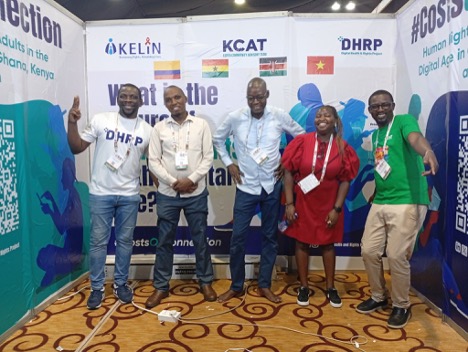
In this blog, I reflect on the conference, share insights from Booth 30—where we discussed the real report paying the cost of connection—and offer practical recommendations inspired by the hundreds of people who engaged with our work.
1. ICASA 2025: Moving beyond Isolation
ICASA 2025 convened under the theme “Africa in Action: Catalysing Integrated Sustainable Responses to End AIDS, TB & Malaria,” was a reminder that Africa’s major health challenges can no longer be tackled in isolation. The theme therefore pushed the continent to think beyond single-disease programmes and instead focus on integrated, people-centred health systems that are resilient, digitally enabled, sustainably financed, and grounded in human rights. Throughout the conference, discussions on digital health, equity, youth leadership, domestic financing, and community-driven solutions echoed this call for stronger, more connected responses—resonating deeply with the conversations we held at Booth 30 on digital access, affordability, and the real cost of connection.
2. Key Reflections from ICASA 2025: Three Big Takeaways
Takeaway 1: Digital Health Must Be Human-Centred
Presentations and discussions highlighted that digital health tools often fail not because they are poorly designed, but because they ignore lived realities. At the booth, visitors including young people repeatedly told us:
“Digital information is useful, but navigating platforms safely is difficult and expensive.”
This reinforces the need for user-centered design that mirrors the complexity of human behaviour, not ideal assumptions.
Takeaway 2: Data Costs Are a Public Health Issue
At Booth 30, visitors who ranged from clinicians to activists, developers to policymakers agreed on one thing: Connectivity determines who benefits from digital health interventions.
If data remains expensive, digital health will reproduce, not reduce, inequalities.
Visitors shared practical recommendations:
- Advocate for reduced data costs or health-related zero-rating policies.
- Push governments to treat internet access as a public health enabler.
- Encourage app developers to reduce data-heavy functionalities.
- Invest in offline-first digital health solutions like USSD codes.
Takeaway 3: Accountability in the Digital Age Is Non-Negotiable
A recurring theme at ICASA was accountability; governments, private tech companies, and humanitarian actors must ensure digital systems protect rights, privacy, and autonomy.
Across sessions, one message stood out: Digital health without digital rights is incomplete health.
3. Lessons From Booth 30: The Cost of Connection
Our booth attracted hundreds of visitors who came to explore the question: “What is the cost of connection?” Their insights were powerful.
What They Told Us
- Digital platforms help young people access sexual and reproductive health information, but not everyone can afford to stay online.
- Apps must be multilingual, accessible to all including persons with disabilities, and must be designed to ensure access even in low-data environments.
- Governments and regulators must take a more active role in protecting users from exploitation, misinformation, and predatory data practices by enforcing data protection policies and where they are absent enacting them.
- Many visitors emphasized the need for local innovation; solutions built in Africa, for Africa based on African lived realities.
What This Means for Us
We must continue creating spaces where people can reflect on the digital barriers they face, advocate for solutions that ensure the barriers are addressed. We must also push for partnerships that work towards bridging digital divides instead of widening them. This includes creating of communities of practice where communities can share issues and solutions that continue to improve access to information and services.
4. Recommendations Moving Forward
Based on the insights gathered, here are priority actions for governments, developers, NGOs, and digital health practitioners:
- Governments: Reduce the cost of data by negotiating public-health zero-rating or subsidized access.
- Governments: Strengthen digital literacy across schools, youth centers, and health facilities.
- App Developers: Design for the margins, including SMS-based or offline-first digital tools.
- App Developers: Build trust through transparent data policies and stronger digital rights frameworks.
- App Developers: Co-create with communities, ensuring tools reflect cultural, linguistic, and accessibility needs.
- Communities, digital health practitioners and NGOs: Monitor harms, including misinformation, data breaches, and digital violence.
5. A Final Word and a Call to Action
ICASA 2025 reminded me that digital health presents extraordinary opportunities but only if we are willing to confront the uncomfortable truths about access, equity, and rights.
To everyone who visited Booth 30, thank you. Your ideas, your questions, and your courage made our space more than an exhibition; it became a platform for honest dialogue about the future of health in Africa and beyond.
From the south to the north and from the west to the east:
Let’s keep the conversation alive.
Let’s continue holding governments accountable.
Let’s challenge app developers to design responsibly.
Let’s ensure that digital innovation serves people—not profits.
Because the future of health is digital. And the future must include us all.