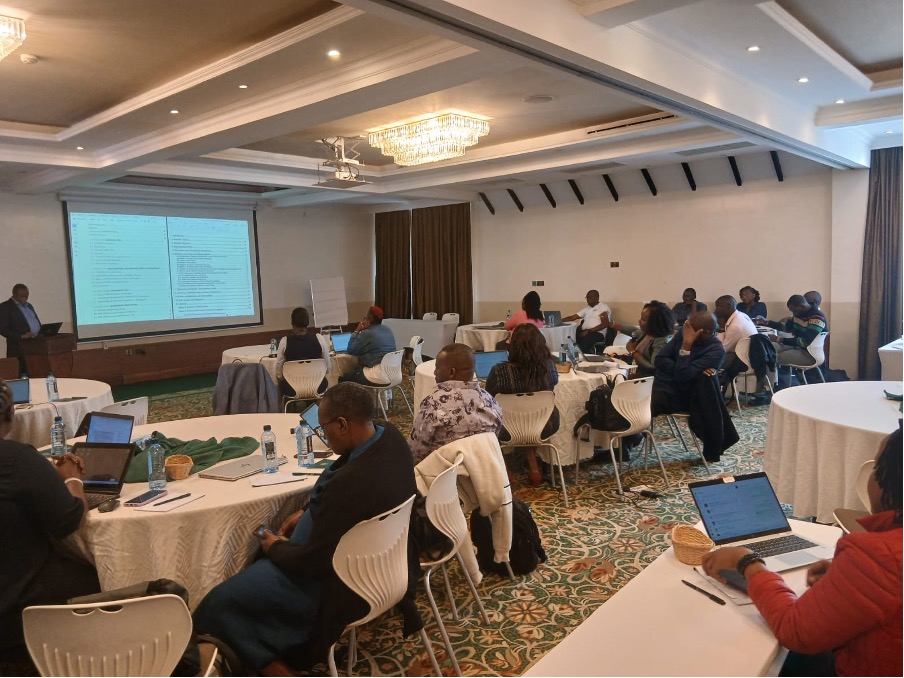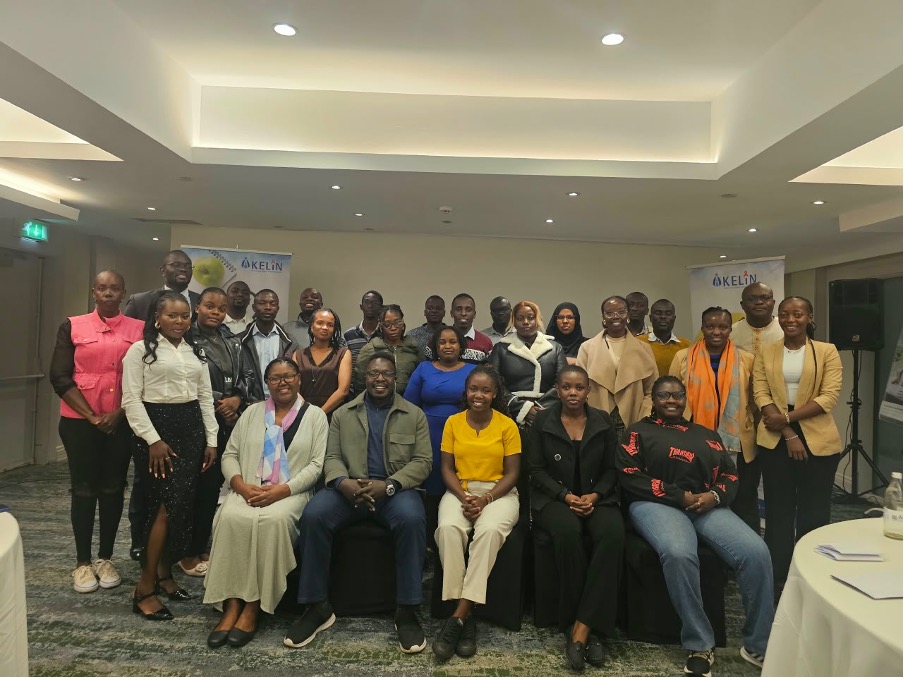
Pauline Omoto, Program Officer at KELIN, sets the stage for Transform Health Kenya’s budget advocacy meeting, highlighting the importance of digital health financing, accountability, and meaningful public participation.
KELIN, as national coordinator of Transform Health Kenya convened coalition members comprising of civil society organizations, youth advocates, policy experts, and community stakeholders for a dialogue on digital health financing, budget advocacy, and public participation ahead of Kenya’s 2026/2027 Finance Bill stakeholder hearings. The engagement reflects KELIN’s continued role in convening civil society and community voices to strengthen accountability, equity, and rights-based approaches in digital health governance and financing in Kenya.
The dialogue comes at a critical moment as Kenya continues expanding digital health systems while facing growing public debate around taxation, affordability, healthcare financing, and digital inclusion.
While the discussions explored the technical aspects of budgeting and digital health financing, one of the strongest themes that emerged throughout the meeting was the growing call for meaningful public participation, transparency, and accountability in how health resources are allocated and implemented in Kenya. Participants repeatedly emphasized that digital health systems cannot succeed without sustained investment in people, trust and equitable access to healthcare services.
The dialogue highlighted concerns around the rising cost of living, increasing taxes on digital devices and connectivity, and the potential impact these measures may have on young people, digital inclusion, and access to healthcare. Participants also reflected on the importance of ensuring that digital health financing prioritizes service delivery, training, interoperability, and community-centred care, rather than infrastructure alone.
Speaking during the meeting, Pauline Omoto of KELIN emphasized the importance of ensuring budget discussions remain grounded in people’s realities, noting: “digital health financing is not just about numbers and systems. It is about whether people can access healthcare, and affordable essential services.”
Reflecting on the importance of accountability and public participation, Stephen Osedo, a policy analyst and consultant from the Centre for Fiscal Action, stated: “we need to question beyond the numbers and ask about the value for money. We need to put a human face to budgeting and bring it back home to the realities communities face every day.”
The discussions also reinforced broader concerns around trust in governance, citizen engagement in budgeting processes, and the need for stronger public awareness around the Finance Bill and health financing decisions. Participants noted that communities must be empowered not only to understand budgeting processes, but also to actively shape them through public participation and advocacy.
As Kenya advances its digital transformation agenda, sustained public participation and equitable financing will remain essential to ensuring digital health systems work for all communities, especially young people and marginalized populations.
Article by Shekina Plowman (she/her), MPH Black Health Candidate, University of Toronto, currently on practicum placement at KELIN.
To contribute to the discussion, follow KELIN on our social media platforms.
For more information, please contact:
Pauline Omoto , Program Officer
Kenya Legal and Ethical Issues Network on HIV & AIDS (KELIN)
Kuwinda Lane, Karen C, off Langáta Road
Email: paulineomoto@kelinkenya.org
Website: https://www.kelinkenya.org